

Encephalitis International
World Immunization Week 2026
Complete Your Vaccination Course: A Key Step in Preventing Encephalitis
Encephalitis International is proud to be part of World Immunization Week campaign and raise both the public and healthcare professional understanding of the the critical importance of completing full vaccination schedules.
Many vaccines designed to prevent infectious diseases—including those that can lead to encephalitis (e.g., Japanese encephalitis, tick-borne encephalitis, measles, mumps and rubella)—require completion of their courses to offer full protection. Evidence from healthcare partners and recent academic studies shows concerning drop-off rates between first, second, third, and booster doses of many routine vaccines. This trend leaves individuals, families, and communities vulnerable to preventable illnesses and outbreaks.
In addition to in-country vaccination programs, travellers must also think about their vaccination scheduling – healthy travel starts before you leave home. Completing the recommended vaccination schedule—and ensuring you’re up to date on travel-specific vaccines—protects you from serious infections abroad and helps prevent their spread.
Where prevention is possible, we must take it!
Think Brain in F.L.A.M.E.S. Think Encephalitis
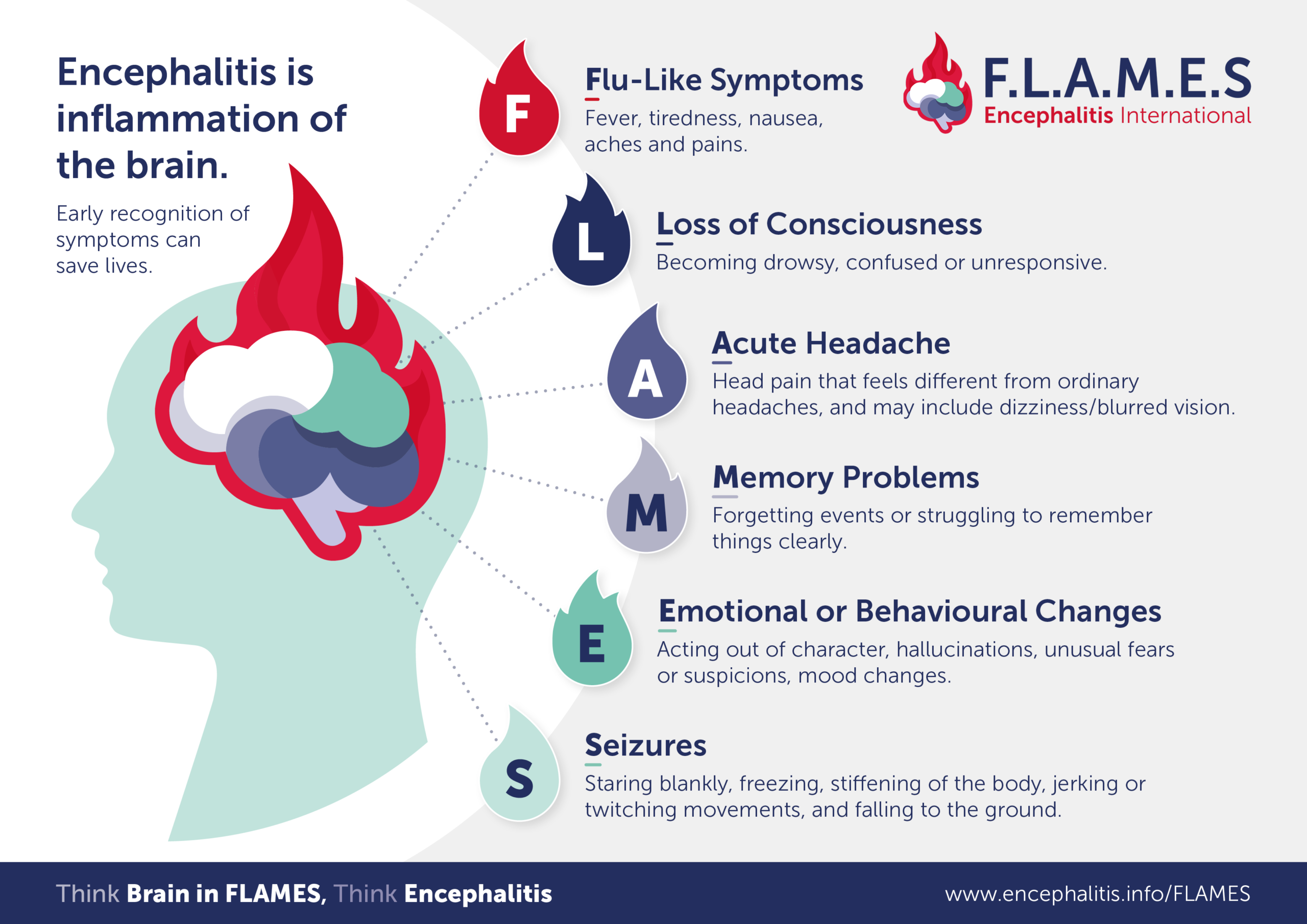
On World Encephalitis Day (WED) 2026, Encephalitis International launched what will be a lifesaving acronym: F.L.A.M.E.S. which reflects the urgent neurological signs that the general public and non-specialist acute medics should be aware of to help recognise encephalitis (inflammation of the brain) earlier.
F.L.A.M.E.S. stands for Flu-like Symptoms, Loss of Consciousness, Acute Headache, Memory Problems, Emotional/Behavioural Changes, Seizures. These are the symptoms most commonly found in both infectious and autoimmune causes of encephalitis.
We need your help today: download your F.L.A.M.E.S. resources and share these far and wide!
What is encephalitis?
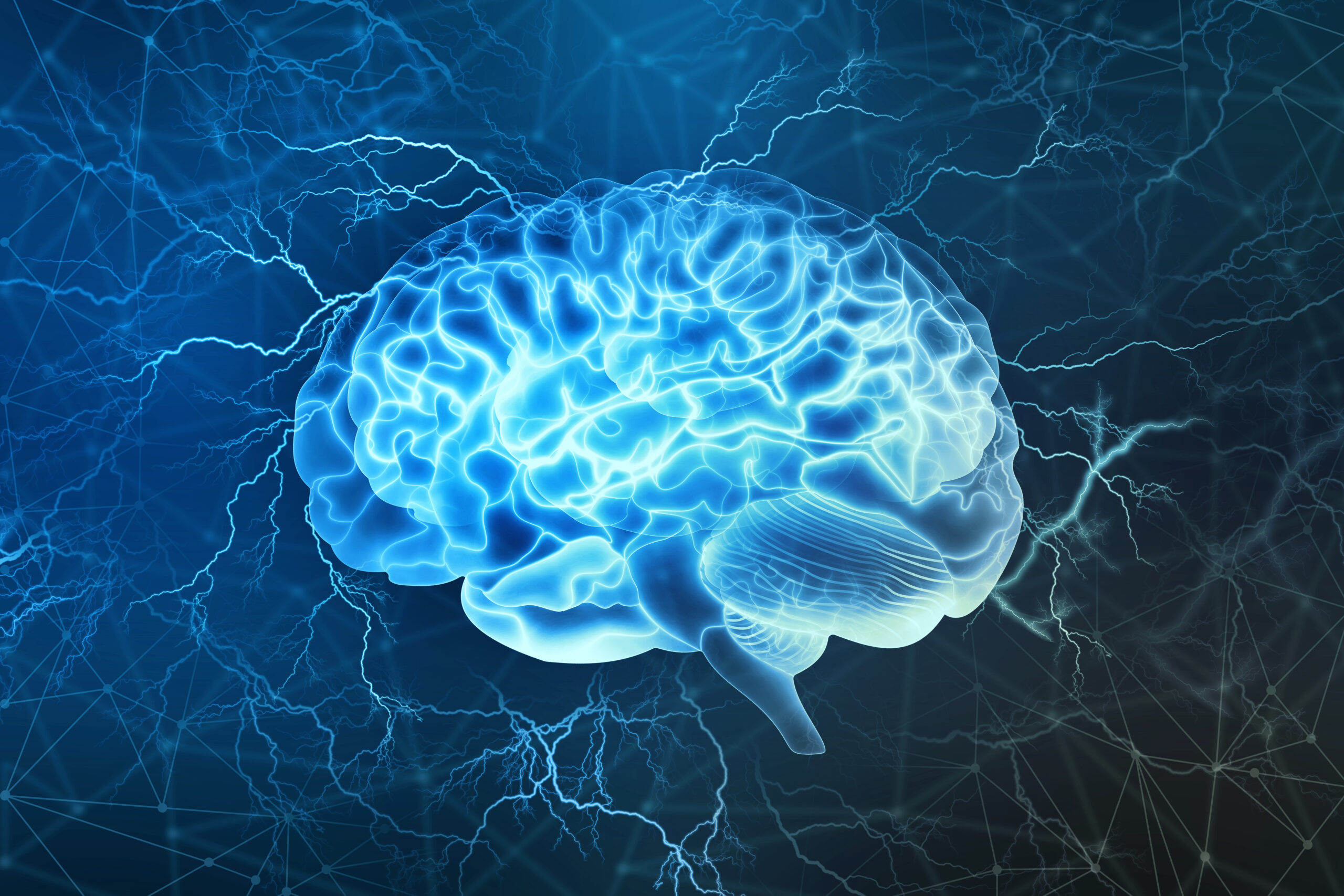
Encephalitis is an inflammation of the brain. It is caused either by an infection invading the brain (infectious encephalitis) or through the immune system attacking the brain in error (post-infectious or autoimmune encephalitis).
Types Of Encephalitis
Three people every minute are diagnosed with encephalitis.

Professionals & Researchers